
One of the biggest arguments amongst the guitar community has always been Standard Notation vs. Tablature. Which is better? Which should I learn? Why do we even have Tablature when other instruments are forced to read Standard Notation exclusively? Well, I plan to answer each of these questions while also providing a brief history of both.
I’ve previously written about the difficulties of reading sheet music for the guitar. If you’re interested in that post, you can find it here: Reading Classical Guitar Notation. When considering the challenges of reading Classical Guitar music written in Standard Notation, we can see why it might be easy and understandable to rely on Tablature for help. But is tablature really a crutch for beginners? Or is it its own credible form of notation?
What exactly is Tablature? Basically, it’s the name given for any notation system that shows where to place your fingers on the instrument, rather than relying on memorization of letter names and note durations. Tablature first appeared around 1450, and was not exclusively for guitar. Many of the first discovered tablature scores were written for keyboard instruments. Here are a few examples of Tablature written for various instruments:
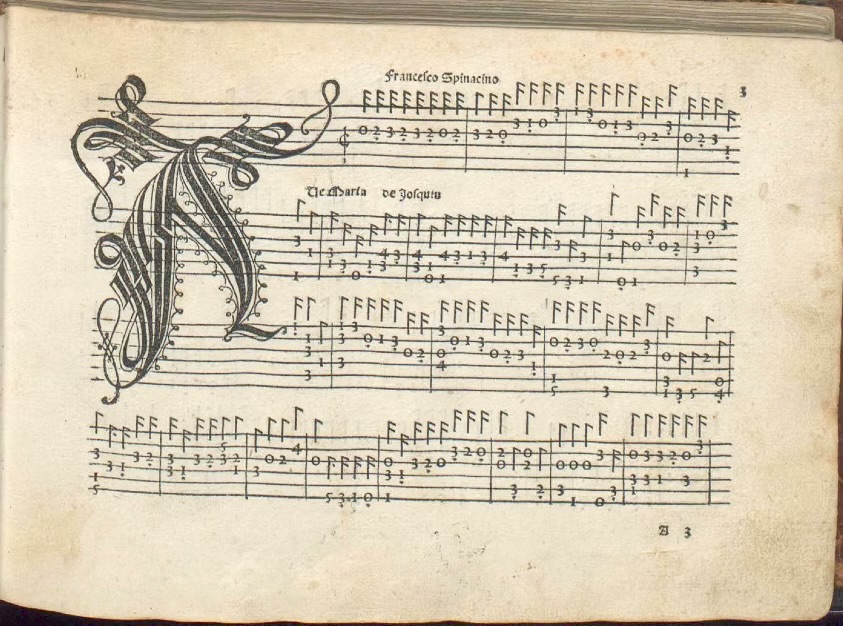
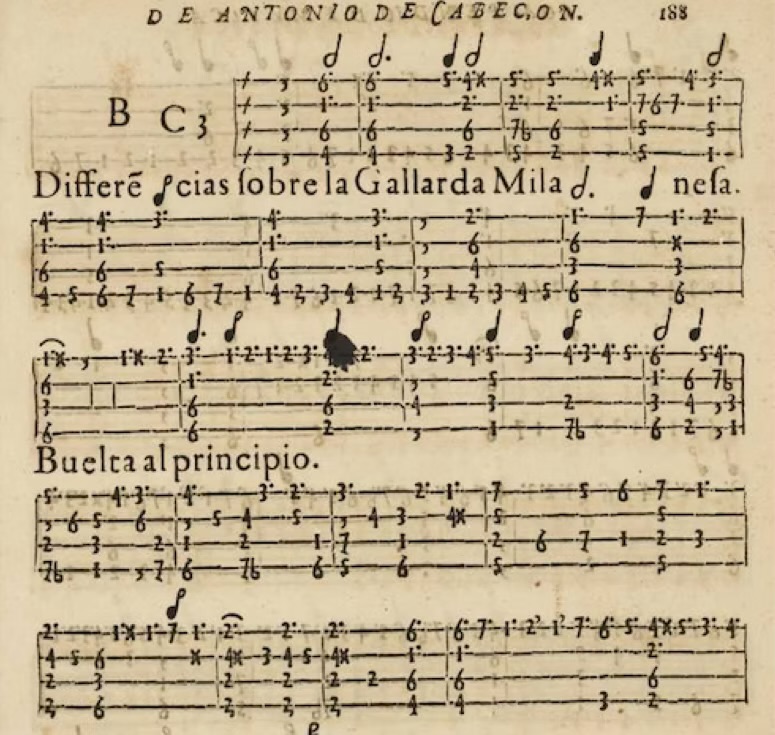
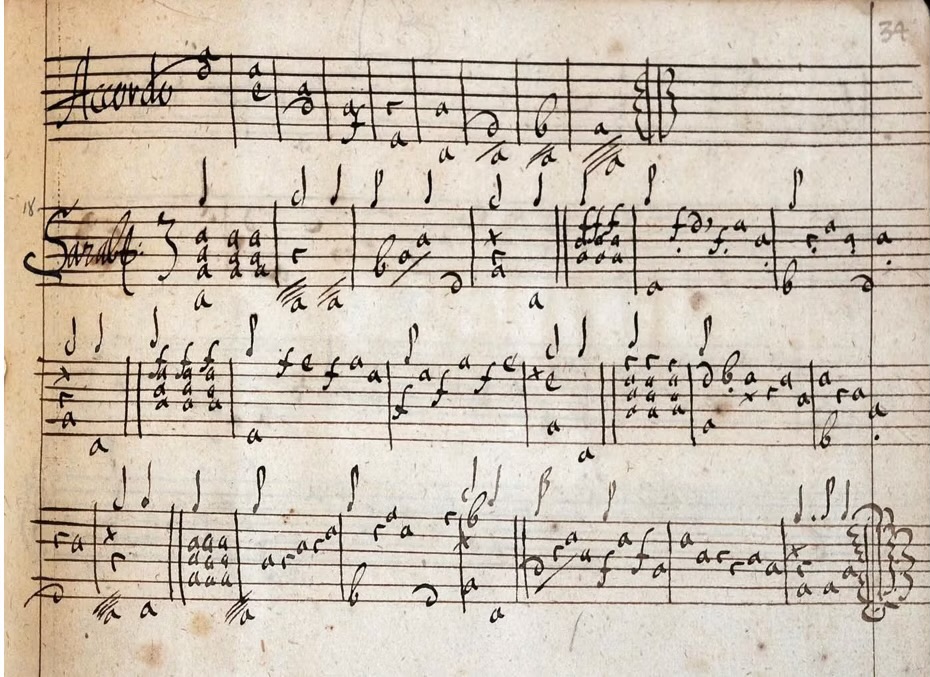
Notice that each of these examples look rather similar to the modern guitar tablature that we use today. The lines still refer to the strings and the numbers represent the placement of the fingers on the fingerboard.
While proven to be a reliable notation for centuries, Tablature is not without flaw. Particularly when looking at rhythm, we notice that there’s very little rhythmic direction within these examples. They lack the flow and continuity of Standard Notation.
What exactly is Standard Notation? Well, it’s the term used for the modern music staff with five lines, four spaces, a time signature, key signature, and clef sign. Standard Notation finds balance by using a two directional staff that determines the pitch vertically and the rhythm horizontally. This system has been the common language for music for the last few centuries. It can be all-inclusive with regards to instrumentation, barring a few small modifications for instruments like the classical guitar.
The most commonly known form of Standard Notation has been around since the 1600s. However, Standard Notation has always been seen as a “work in progress.” The earliest form of notation was created around the year 1000 A.D. This notation only used four lines, but was the foundation for modern solfège (do, re, mi, fa, sol la, it, do).
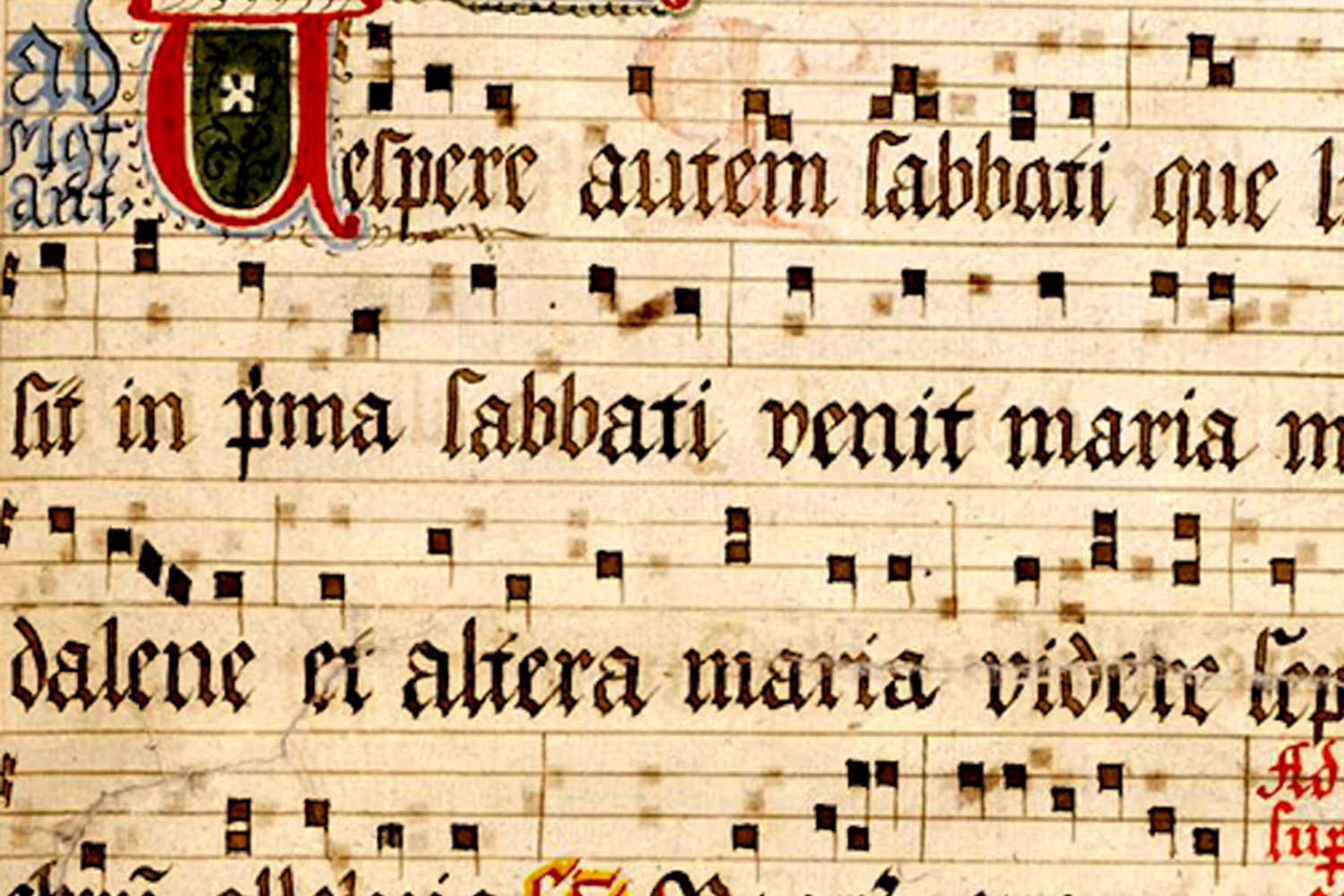
While this system seemed to be an acceptable form for vocal melodies, it still lacked in rhythmic dictation, and was not easily understood by instrumentalists. You’ll also notice that there are no dynamic markings, tempo markings, or any other distinctive symbols that provide direction for expression and musicality. Over the next several hundred years, notation became modified to include each of these things and developed into the five lines and four spaces that we know and use today.
So, which is better? Which should you learn? I would argue that there is value in both. However, strictly relying on Tablature creates many shortcomings and problems associated with rhythm. Many modern transcriptions of Classical Guitar music include both Tablature and Standard Notation in their scores. I would say that it is beneficial to study this way until you feel that you are proficient in reading Standard Notation alone. In my own time as a student, I definitely used Tablature as a way to help me interpret notes in unfamiliar positions along the fingerboard. The connections and “ah-ha” moments made during this time studying scores is invaluable.
Tablature is a tool. It helps those who may not be as practiced or experienced with standard notation overcome the many challenges of reading multiple parts on one staff, which is generally something that is almost entirely exclusive to the guitar. Do I still use Tablature? Not really. But knowing that I’m prepared for that situation is truly freeing and gives me the confidence in my ability to sight read and play (at least to some degree) any piece that’s presented to me. With this in mind, I always include both Standard Notation and Standard Notation with Tablature options for every arrangement, composition, or transcription that I create.